
What is it that makes us want to underline or highlight passages from books?
Frankly, I’ve always found this inclination to be something of a mystery. Until a few days ago, the only highlighting I’d ever done had been in textbooks. To mark up the text of a novel always seemed, to me, a little gauche. The more I loved a novel, the more inappropriate the idea of desecrating its pages with my own markings seemed to me. Like drawing stick figures on a famous painting, or scribbling my own thoughts into the holy texts of someone else’s religion.
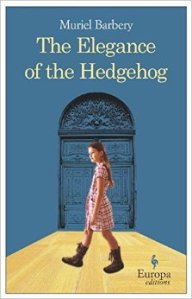
The Elegance of the Hedgehog, however, has made a convert of me. Almost from the first moment I began reading it, I felt a compulsion to underline and highlight, to dog-ear pages, to do whatever it would take to remember what I was reading. There is so much beauty in this book that it is almost hard to talk about. There are so many sentences that are perfectly phrased, so many observations that are just exactly right. At one point one of the characters is talking about the importance of respect for grammatical rules. Just read this:
Language is a bountiful gift and its usage, an elaboration of community and society, is a sacred work. Language and usage evolve over time: elements change, are forgotten or reborn, and while there are instances where transgression can become the source of an even greater wealth, this does not alter the fact that to be entitled to the liberties of playfulness or enlightened misusage when using language, one must first and foremost have sworn one’s total allegiance.
First of all: I love this because it’s true.
Second: I love this because of how it comes to be in the novel. The character making the observation, the concierge in an old building in Paris, has received a note from one of the building’s residents – and the note contains an unnecessary comma! That’s it! The novel has this way of handing you these humorous little banalities and then as you read those banalities flower into these perfect (I keep using that word, I know) truths.
The novel is funny, the novel is smart, the novel is insightful, the novel is sweet, the novel is bittersweet. But what, you ask, is the novel about?
Well. Not much, to be honest, depending on how you want to look at it. The plot, such as it is, is this: Renee, a 54 year-old Parisian woman, is a concierge in a hotel particulier, which is apparently like an apartment building or a townhouse. She collects the packages for the building’s residents and cleans the common areas, does various other chores as well, and is more or less ignored by everyone in the building. But she is also a fiercely intelligent autodidact, a voracious consumer of literature and art and philosophy – a fact she keeps hidden for reasons that don’t really become clear until near the end of the novel. Then there is another character, a 12 year-old girl named Paloma, who lives in the building. Paloma is also very smart, and she also keeps her intelligence mostly hidden. She has decided to kill herself on her thirteenth birthday, because she believes life is meaningless. We see the events of the novel unfold through the eyes of these dual narrators. Their lives are changed by their encounters with each other as well as with a new resident to the building, a wealthy Japanese man named Kakuro Ozu.
Listen: This book is not The Da Vinci Code. Plot is very secondary here. Now and then something happens, but that’s not really the point. You’re not reading this novel because you want to hear a good story, you’re reading it for the same reason you might stare, transfixed, at a painting in a museum: because it is beautiful. God, this book is beautiful. It’s so beautiful it makes me want to learn French so I can read it in its original language.
If you haven’t read The Elegance of the Hedgehog, you should go buy it. And while you’re out, you should buy a highlighter too because I guarantee you’ll find a sentence on nearly every page that you will want to remember forever.
 hereisagoodbook