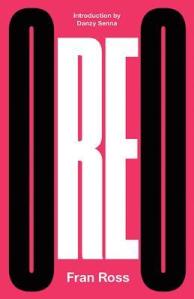
Fran Ross’ Oreo is a book that is smarter than it is good. There’s plenty of interesting stuff happening in Oreo; the problem is that the whole is less than the sum of its parts. The story is a feminist take on the Theseus myth, starring a young half-black half-Jewish woman and set in the 1970s. At its best, Oreo reminded me of A Confederacy of Dunces. It has the same sort of over-the-top intellectual references and arcane descriptions of essentially banal and ordinary situations. The difference is that Confederacy employs its ridiculous intellectualism to make fun of its pretentious main character, whereas Oreo seems to think the constant literary allusions and wordplay are funny in themselves.
The first twenty pages or so of Oreo are easily the funniest, most compelling part of the book. It’s here, perhaps because the author is just setting up the story, that you get the most throwaway jokes — which are the funniest jokes the novel has to offer. After that, Ross gets serious about her jokes and it’s all downhill from there. You keep reading, at this point, primarily because it’s a short novel and when you’re 20 pages in you’re already a decent part of the way through. If Oreo had been twice as long, I would have quit.
As flawed as I thought the book was, though, I have no regrets whatsoever about reading it. In fact, after putting it down I found that I wanted to know more about the author and about how it was written. What little biographical information on her I was able to find reveals that she possessed an unusually gifted mind: the daughter of a store clerk and a welder, she graduated high school at 15 years old and received a full scholarship to Temple University. After graduating, she worked for a while at the Saturday Evening Post and later as a proofreader at various publishing companies in New York City. After Oreo was published she got a job as a writer on The Richard Pryor Show, which aired in 1977 and was canceled after just four controversial episodes. Ross more or less gave up on writing after that, because it didn’t pay the bills, and died eight years later at the young age of 50.
Though coincidental, I thought it was particularly interesting to have read this book around the time that Paul Beatty’s The Sellout was getting some fresh recognition after winning the Man Booker Prize. Beatty has effusively praised Oreo. For some reason I never did a post about The Sellout, but it’s also a comic novel about race, only more conventionally plotted and (to my mind, at least) more successful in its attempts at humor. Still, Oreo is fascinating despite its failures because of all it attempts to do, and because of all it contains in its relatively short length. More than a novel, Oreo is a testament to its author’s remarkable intellect. It left me wanting to know more about Ross and it left me wondering what else she might have produced if circumstances had allowed her to go on writing.
 hereisagoodbook