
The Martian, by Andy Weir

The Martian, by Andy Weir

This book is kind of like Cast Away, only on Mars and much funnier. Funny books can be tricky because it’s often the case that the more they make you laugh, the less tension exists to push the reader through to the resolution of the plot. There’s another novel, called Off to Be the Wizardthat I recently gave up on for exactly this reason. Even though it was making me laugh more than any piece of fiction I’ve read in quite a while, it was accomplishing that at the expense of trivializing its plot and its characters.

The Martian is able to avoid this problem, and I think that’s because it puts the story first. The laughs come from the protagonist’s believable — and sharp — sense of gallows humor. The comparison I’m making here, by the way, is not exactly fair, because although The Martian can be quite funny, it’s not written primarily for laughs, as is the case with Off to Be The WizardThe Martian is primarily a novel of human resourcefulness and adaptibility. Second, it is hard science fiction of the most believable kind, filled with facts about astronomy, physics, and botany (yes, on Mars). Funny is perhaps a distant third on the list of things this book is trying to be. But maybe that’s the best way, or at least the safest one, for funny novels to also be good novels. I don’t know.
Continue reading

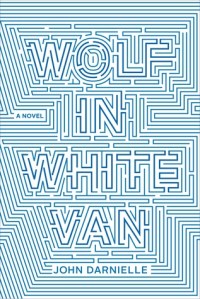
Wolf in White Van, by John Darnielle

wolf

Wolf in White Van is a pretty impressive achievement, but it’s difficult to explain why that is without giving away some of what the novel does. I intentionally avoided using the word “spoilers” in that last sentence because, despite what you might think after reading the dust jacket, this is not a plot-driven book. It’s more a portrait of a single character, or a diagram of what makes him tick (though he claims at one point that nothing makes him tick). What distinguishes Wolf from other character-focused books I’ve read, however, is that Sean (the protagonist) is not someone you would normally want to see a portrait of – either literally (he has a horrible facial deformity as the result of a past traumatic event) or figuratively (he is, or at least once was, deeply weird and possibly damaged in ways you will either relate to or not; either way, reading about it is an uncomfortable experience).

Continue reading

On plot summaries

I know they’re important but I don’t really like writing them, and since this is my blog I generally won’t unless I feel like I really need to for some reason. If you feel lost without knowing what the book’s basic gist is, I recommend checking the Amazon page, which I try to always link to in my posts. Sorry/thanks!

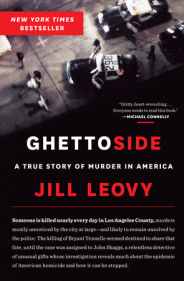
Ghettoside, by Jill Leovy

ghettoside
Ghettoside: A True Story of Murder in America

This is essential reading. Frequently, the reason a non-fiction book really grabs my attention is that it relates its thesis convincingly while still managing some how to read like a novel, with fully-formed characters and good pacing. I’m thinking, for example, of Lawrence Wright’s The Looming Tower, which is an absolute masterpiece of journalism on the origins of al-Qaeda, thoroughly sourced and replete with facts, but still as compelling as any thriller. David Grann’s The Lost City of Z, about Percy Fawcett’s ill-fated expedition into the Amazon, is another book with these traits.

Ghettoside is not like either of those books. It’s certainly well-researched and it’s a page-turner in its own way, but the experience of reading it is nothing like the experience of reading a novel. It’s much more like reading a really good, really long newspaper article — which makes sense, because its author was formerly a reporter at The Los Angeles Times. The writing in Ghettoside is fine, but that’s not why you read it, just like that’s not why you read a newspaper article. You read it because the story it tells is important.

Continue reading

Words I like: uncouth

I looked it up and “uncouth” comes from old English “uncuth,” meaning unknown (itself from “cunnan,” meaning “to know or be able”). I assume that it gained its current usage by first being used in the sense of “unheard of,” like “What you’re doing is such bad manners it’s unheard of.” I’m just guessing about that, but let’s say I’m right because it makes sense. Nowadays its connotation is not quite that extreme; something uncouth is merely unrefined. It’s funny how words can kind of erode like that, sort of like mountains turn into foothills given enough time.  Continue reading

The Savage Detectives, by Roberto Bolaño

The Savage Detectives, by Roberto Bolaño
This book posed an interesting problem for me, because while it is unquestionably a good book it’s also one that I’m not sure I can really honestly recommend to anyone. Let me tell you what this book is about: Two poets living in Mexico and other places from about the mid-70s through the mid-90s. There’s a very vague semblance of a story that sort of bookends the novel and has to do with the two poets looking for another poet, a woman who founded their branch of Mexican poetry (called visceral realism) and disappeared in the 20s. For most of the book, however, this storyline is either ignored completely or referred to only in the most opaque ways, and to be honest it’s not a particularly interesting plot in any case.

Continue reading